Booking intake
Booking requests arrive by email in any layout. They become structured orders in the WMS without retyping.
emailorder
Attractor Engine
NK Technologies builds and licenses the Attractor Engine. It turns emails, PDFs and scans into validated, structured data, and runs the agents that act on it for hours or days at a time.
Dubai · DIFC
The engine
One engine turns any unstructured input into structured, validated output. Every use case runs on the same runtime — capabilities are configuration, not new code. Document Intelligence, email triage, workflow automation, and agents all run on the same engine.
The differentiator is the gate, not the model call. Output you can put into a production system, because everything below a measured confidence threshold goes to a human — and every correction makes the next run better.
The gate
Between the model and your systems sits a gate. It is what makes the output safe to put into production.
Every output is checked against fixed rules first — structure, types, required fields. This part is not the model; it passes or it does not.
Each result carries an engineered confidence score for how much it can be trusted.
Above the threshold, output is accepted automatically. Below it, it is routed to a person before anything is used.
Every human correction folds back in within the deployment, so the same work needs the gate less over time. Nothing is pooled across customers.
Long-running agentic workflows
Real logistics work doesn't finish in one call. A run waits for a carrier, pauses for a person, retries a portal that's down, and picks up exactly where it stopped, whether that's minutes or days later.
Run completed in 2 days, 4 hours, 48 minutes.
Demurrage charge parsed from the carrier's PDF.
Mon 08:14Gate-out, free-time terms and port delay notices matched.
Mon 08:16Claim drafted with the timeline attached.
Mon 08:21An ops lead checked the claim and approved sending it.
Mon 09:05Claim sent. The run is parked with its state saved. No polling loop.
paused 2d 2hCarrier offered partial credit. An ops lead accepted it.
Wed 11:40Credit note posted to the WMS and the case closed.
Wed 13:02Every step is checkpointed. A restart or deploy resumes the run; it never starts over.
Runs pause for an approval and continue as soon as someone signs off.
Emails, portal updates and timers wake a parked run. Nothing sits polling.
Each decision, document and model call is recorded against the run.
The Runs surface — illustrative
Packs
Compound files in; segmented and extracted structured records out. A mixed document is split into its parts, the fields that matter are pulled and validated, and anything uncertain is routed to a person before it is accepted.
Classifies, contextualises, and routes inbound mail, holding drafted replies behind the same confidence gate until they clear the threshold or a person signs off.
Runs event-triggered processes as graphs on the same runtime, routing high-impact steps to human approval before they proceed.
Plans and executes multi-step, tool-using work under the same deterministic validation, confidence scoring, and human gates as every other output — nothing acts unchecked.
Logistics use cases
These are the jobs it handles across freight, warehouse and customs work.
Booking requests arrive by email in any layout. They become structured orders in the WMS without retyping.
Shipper, consignee, container numbers and seals extracted and checked against the booking.
HS codes, values and origin compared across the invoice and packing list before filing.
Phone photos of signed delivery notes read, matched to the stop and flagged when anything's missing.
Carrier charges checked line by line against contracted rates. Overbilling goes to review.
Delay notices read as they arrive. Affected orders are found and customer notices drafted for sign-off.
On the warehouse floor
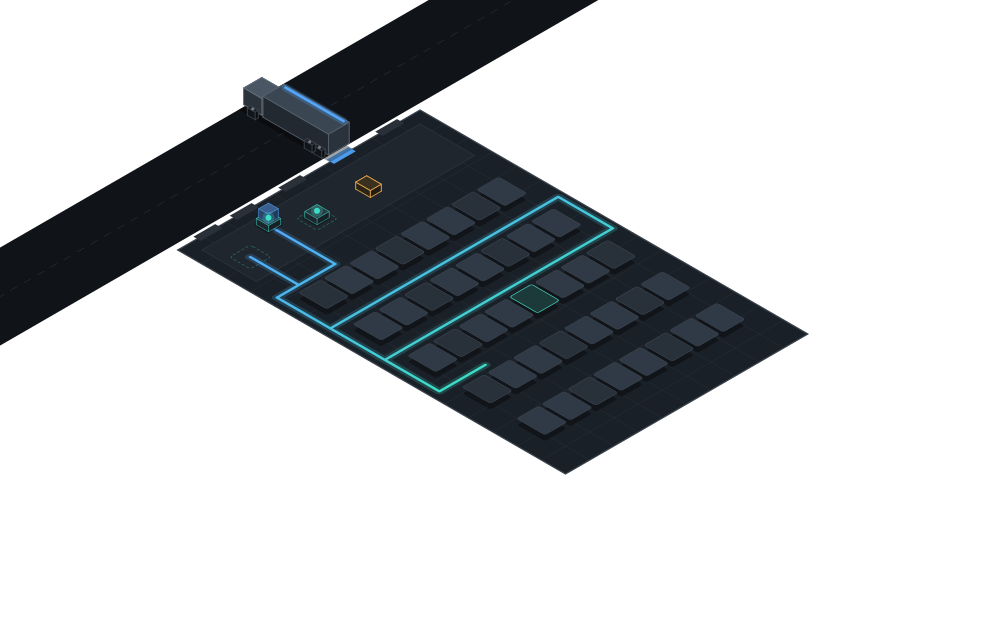
A truck docks. The engine reads the paperwork, matches it to the order and holds what doesn't add up for a person. Then it hands storing and picking to the warehouse robots. The engine decides; the robots execute.
Illustrative floor, documents and figures; not customer data or results.
Across the network
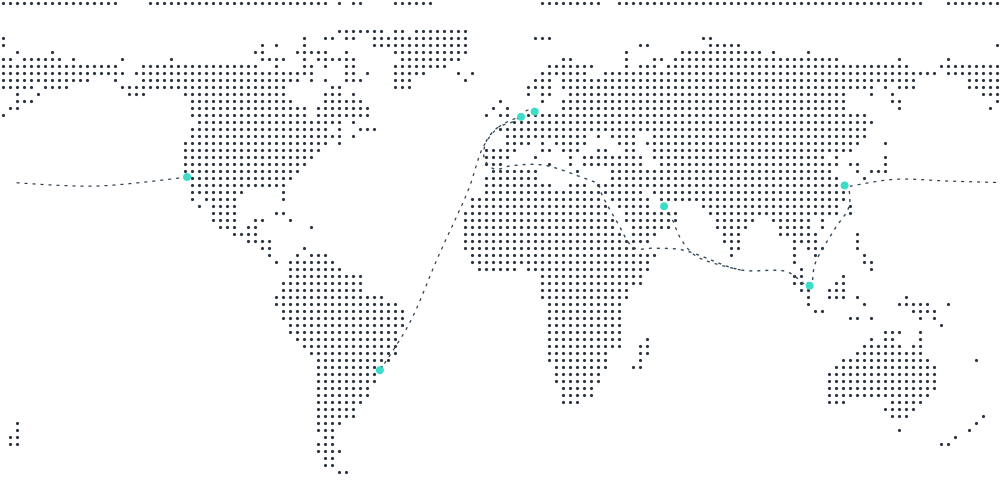
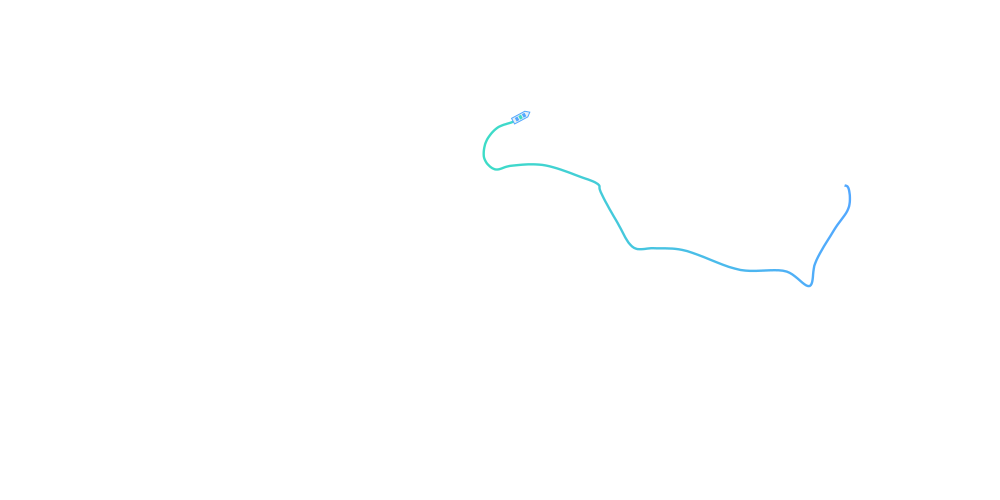
One container vessel crosses from Shanghai to Rotterdam. Before it berths, the engine has read the manifest, caught a delay, pre-checked customs and booked the dock slots in the warehouses that receive the cargo.
Illustrative network and figures; not customer locations or results.
What goes in, what comes out
The engine takes mixed, unstructured input and returns structured records you can put straight into a system.
In
Out
Deployment
Behind your systems.
The engine runs behind your existing systems. Output lands where your work already happens.
A surface of its own.
The engine plus its own operational surface — review queue, audit trail, document history, exports. Your team works in it directly.
The Workbench surface — illustrative
Sectors
Structured, validated output from the unstructured input that moves cargo — documents, messages, and data.
Operational signal pulled and validated from mixed, unstructured inbound.
High-volume back-office work across documents, email, and messages — gated and audited.
Structure
Developer & licensor
Develops and licenses the engine.
Delivery partner & operator (DACH)
Co-founded by NK Technologies.
Technical partnership
Maritime logistics.
How we work
Architecture, engineering, and AI systems are built in-house, not assembled from parts.
The engine is in production, held to production standards — not demo ones.
The engine is maintained by the team that built it. Responsibility does not end at the licence.
Trust & data handling
FAQ
Contact
For partnerships, product, or anything else.
info@nktech.ai